REVIEW · ROVANIEMI
Snowshoeing Adventure with Ice-Fishing, Fire and Survival
Book on Viator →Operated by Nordic Odyssey · Bookable on Viator
Snow turns practical fast in Lapland. This 4-hour Rovaniemi experience mixes snowshoeing, ice-fishing, and hands-on survival learning, so you’re not just looking at winter. You also practice navigation using a map and compass while your guide shares local know-how built for Arctic conditions.
Two things I especially like: you get real instruction on orientation (not just a scenic walk), and the food part is active. You’ll drill a hole on the frozen lake and, if you catch a fish, cook it over your campfire. One small consideration: this kind of outdoor plan depends on weather, so expect changes if conditions are poor.
A big plus in the recent feedback: the guide named Timo stands out for making survival skills feel doable, even for families. That’s the style you want out here: clear teaching, not vague survival mythology.
In This Review
- Key Points You’ll Care About Before You Go
- Where This Snowshoeing Tour Fits in Rovaniemi
- Price and Value: What $150.03 Buys You
- Getting Started at Jaakonkatu: Pickup and Small-Group Setup
- Snowshoeing Into the Silent Forest: Pace and Teaching Style
- Orientation With a Map and Compass: Learning Your Way in Whiteout Conditions
- Campfire Survival Skills: Using Local Tools and Arctic Plants
- Ice-Fishing on a Frozen Lake: Try, Learn, Eat
- If You Don’t Catch Fish: Finnish BBQ Snack to Keep Morale Up
- The Guide Matters: Why Timo Gets Mentioned
- Time on the Ground: What the 4-Hour Flow Feels Like
- Who Should Book This Tour (and Who Might Skip)
- Practical Considerations: Weather and Pace
- Should You Book Nordic Odyssey’s Survival Snowshoeing Tour?
- FAQ
- How long is the snowshoeing tour in Rovaniemi?
- How much does the experience cost per person?
- Does the tour offer pickup or transportation help?
- Where do you meet and where does the tour end?
- How many people are in a group?
- What language is the tour offered in?
- Do you learn navigation skills during the tour?
- Do you try ice-fishing and cook what you catch?
- What happens if you do not catch a fish?
- What if the weather is poor?
Key Points You’ll Care About Before You Go
- Map-and-compass orientation so you can understand where you are in the forest
- Fire-making survival skills tied to local Arctic habits
- Ice-fishing from a frozen lake, plus grilling if you land a catch
- A campfire snack backup if fishing isn’t in your favor
- Small-group pace with a maximum of 8 travelers
Where This Snowshoeing Tour Fits in Rovaniemi
Rovaniemi is full of winter activities, but this one is different because it teaches you skills you can use beyond the tour. You’re out in snowy woods long enough to feel the silence, but the timing is structured so you also learn how to handle real basics: finding your way, making fire, and turning a frozen lake into dinner.
The location is easy to anchor: you meet at Jaakonkatu 4-6, 96200 Rovaniemi and the experience returns you there. If you’re staying in town, that matters. It reduces the “logistics tax” and gives you more energy for the cold adventure itself.
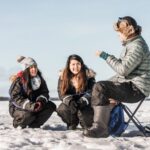
You also get a small-group feel. The tour is capped at 8 travelers, and the reviews include groups like 6 people plus the guide. In a group that small, questions actually get answered and instructions can be tailored when you’re learning something new.
You can also read our reviews of more tours and experiences in Rovaniemi
Price and Value: What $150.03 Buys You
At about $150.03 per person for roughly 4 hours, this isn’t a budget stroll. But you are paying for an experience that stacks multiple activities into one taught session:
You’re not only snowshoeing. You’re also getting instruction for orientation with a map and compass, learning survival-related fire-making, and trying ice-fishing on a frozen lake. Then you get a food moment built around the campfire: either grilled fish if you catch one, or a Finnish barbecue-style snack prepared by your guide if you don’t.
If you compare it to doing separate winter tours (one for snowshoeing, another for fishing, another for campfire food), the price starts to look more reasonable. Here, one guide handles the whole arc—from how to find your direction to how to cook what you catch.
There’s another value angle too: a tour like this saves you the trial-and-error time. Even if you’re curious and outdoorsy, navigation and fire skills in Arctic winter conditions are not the place to “wing it.”
Getting Started at Jaakonkatu: Pickup and Small-Group Setup
You’ll start and end at Jaakonkatu 4-6. Pickup is offered, and the meeting area is near public transportation, which makes it workable if you’re traveling without a car.
The tour runs in English, and you’ll want to lean into the questions. That’s when the whole survival-skills angle becomes real instead of just a checklist.
With a maximum of 8 travelers, you’re likely to get more hands-on time than on bigger tours. In the positive reviews, that small size shows up as a highlight because everyone learned the same core basics—especially around starting a fire with the tool and practicing orientation.
Snowshoeing Into the Silent Forest: Pace and Teaching Style
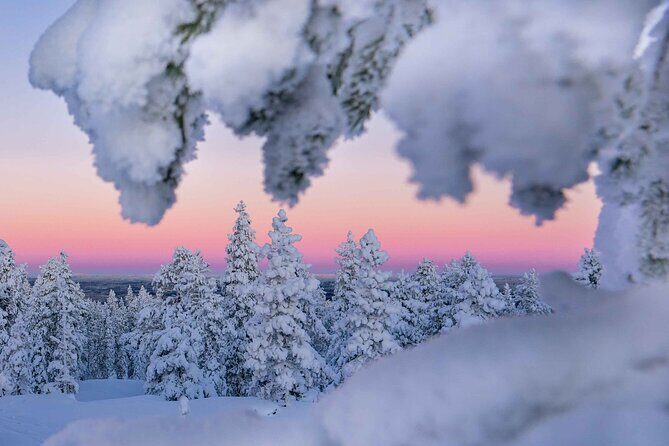
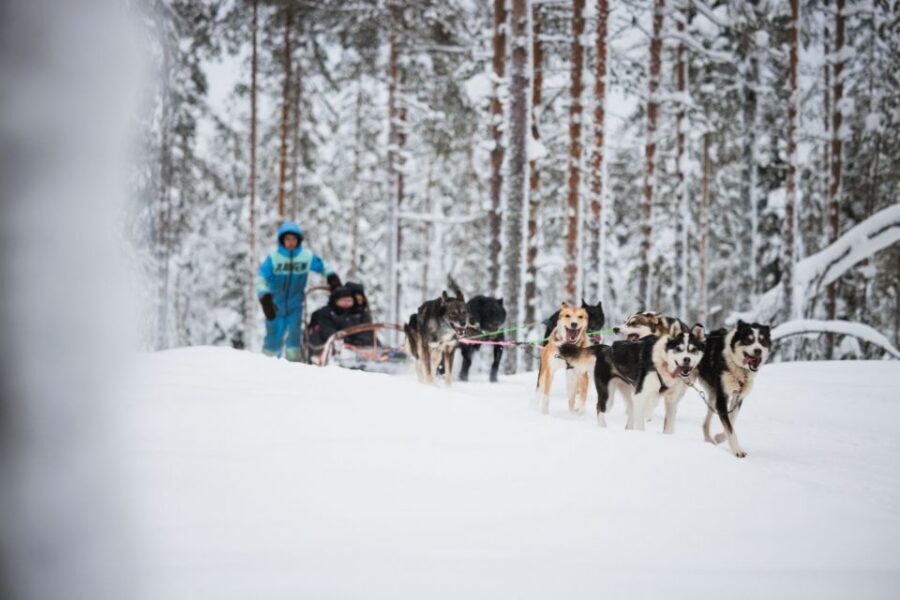
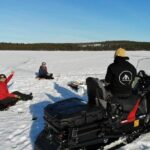
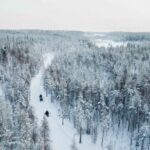
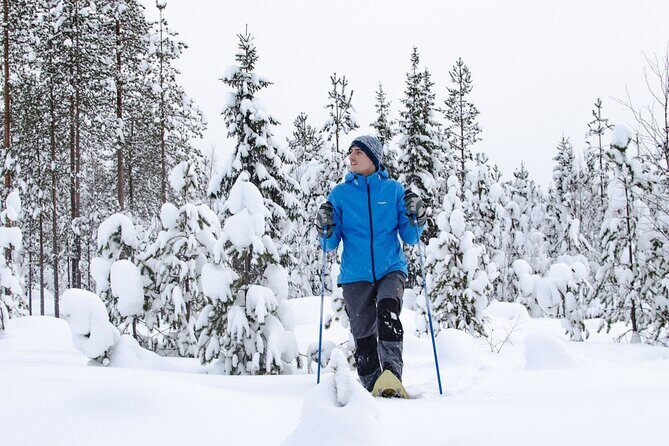
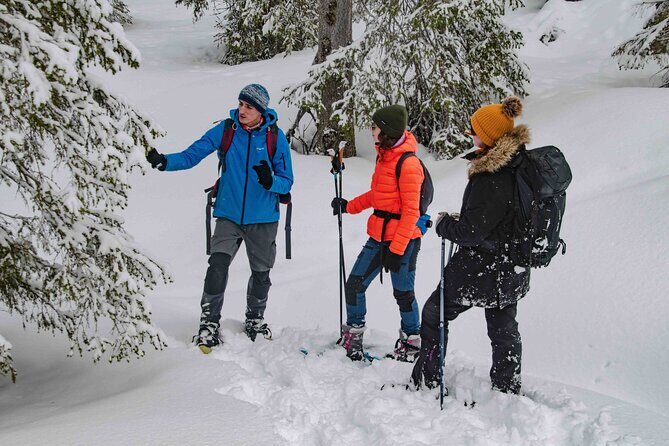
The tour starts with snowshoes on and moves into the snowy forests around Lapland. The point isn’t to rush you to a view and call it a day. It’s to keep you moving enough that you’re engaged, but not so fast that you can’t absorb what the guide is teaching.
The guide’s job is to adapt the session to your level. The tour description calls it adapted to every level, and the practical implication is that you’ll be taught the basics clearly, not assumed. That matters if you’re newer to snow hiking or if you’re bringing kids.
You’ll also get nature education woven into the walk: the guide shares survival-relevant knowledge about the environment you’re passing through. One review specifically calls out learning multiple survival topics, not just “follow the leader.”
Orientation With a Map and Compass: Learning Your Way in Whiteout Conditions
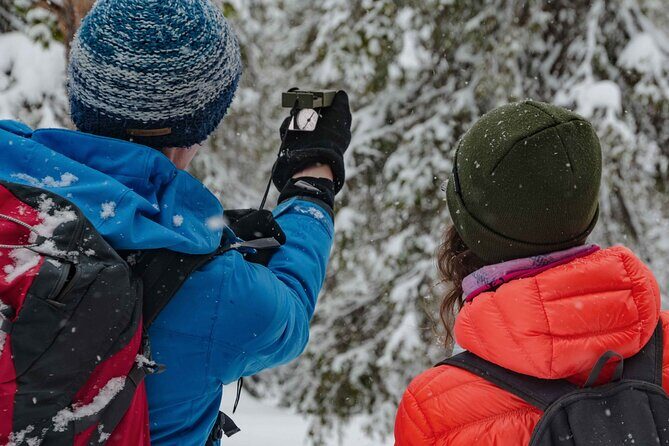
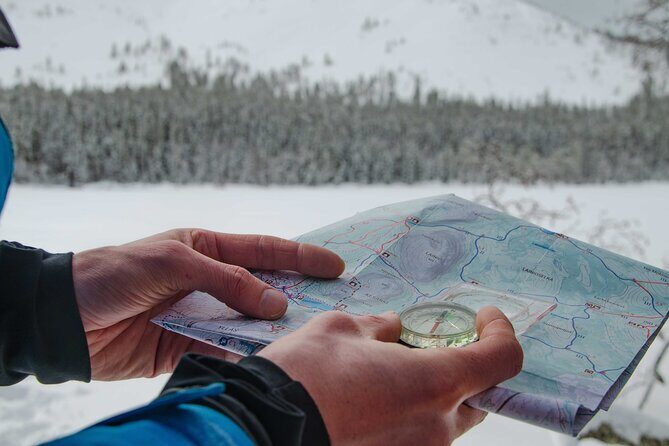
This is one of the most useful parts of the whole experience. You don’t just glance at a map; you use a map and compass to orient yourself with help from your guide.
Here’s why this is such good value: in winter, getting turned around is easy. Snow hides trails. Trees look similar. Even short distances can feel confusing. A guided practice session teaches you how to think rather than memorize.
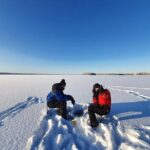
On this tour, the orientation piece supports the route to the shores of a large frozen lake. So you learn the skill while you’re actively using it. That’s a much better learning loop than watching someone explain a compass in a warm room.
The reviews put real weight on the guide’s teaching. One standout is that the guide Timo helped the group learn how to start a fire and handle orientation steps, which signals a clear, patient approach—not just “here’s the gear, good luck.”

Campfire Survival Skills: Using Local Tools and Arctic Plants
At some point, you make your own camp. Then the survival lesson turns from theory into warmth.
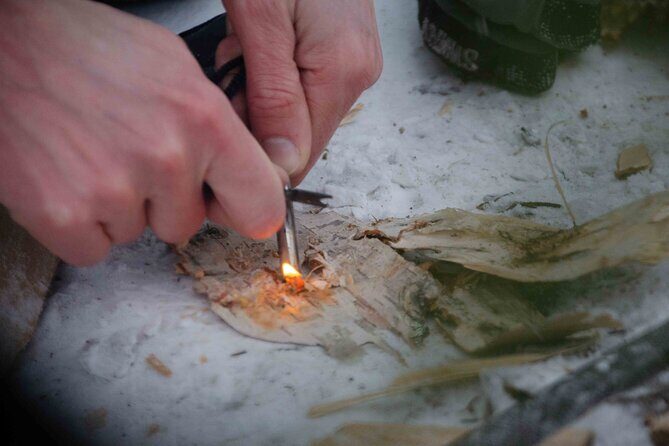
You’ll build your own fire to warm up, and the guide also explains how to use trees or mushrooms for fire-making, plus how local flora has been used for food and medicine. The details can vary by conditions and what the guide decides is practical, but the theme is consistent: Arctic people developed ways to work with what’s around them.
One reason I like this part: it’s both useful and respectful. You’re not treating the forest like a prop. You’re being taught how people have lived in similar conditions for a long time.
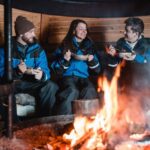
The campfire itself is also where the group gets calmer. Even when you’re actively doing tasks, there’s a rhythm to sitting close to heat after time in cold air. The reviews mention a convivial moment around the fire, and that’s exactly how this kind of tour should feel: hands-on, then shared conversation.
Ice-Fishing on a Frozen Lake: Try, Learn, Eat
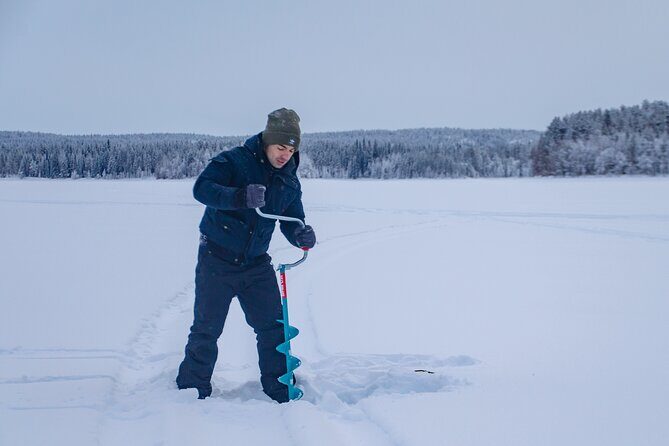
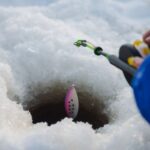
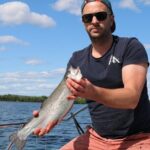
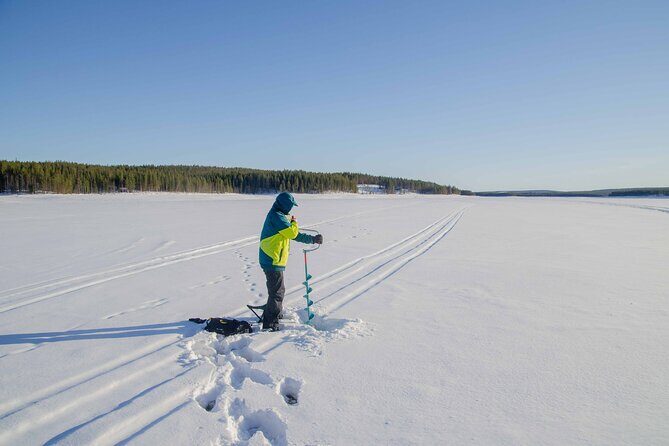
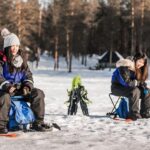
Then comes the ice-fishing portion—hands-on, not spectator time. You’ll drill your own hole in the frozen lake and try fishing.
The learning goal here isn’t just catching fish. It’s understanding the process in context: how winter changes the rules, how the lake becomes part of the survival setup, and how you connect the catch to what you do next.
And if you catch something, you’ll grill the fish over the campfire. That step matters because it closes the loop. You start with the lake, you handle the task, and you end with a meal you can point to and say, I made that happen.
A practical note: ice-fishing can be unpredictable. The tour plan accounts for that, which makes the experience feel balanced instead of stressful.
If You Don’t Catch Fish: Finnish BBQ Snack to Keep Morale Up
You’re not guaranteed a fish. If luck isn’t on your side, the guide prepares a delicious Finnish barbecue snack around the fire.
That backup is smart for two reasons:
- It keeps the tour fun for everyone, even beginners at fishing.
- It prevents a cold, quiet letdown. You still get a warm, social meal moment.
This structure also means the campfire isn’t just a cooking station. It’s the conversation hub. The guide answers questions about Lapland, and you’ll likely leave with practical and cultural details that don’t fit neatly into a museum caption.
The Guide Matters: Why Timo Gets Mentioned
In the feedback, the guide Timo comes up as a clear reason people loved the day. The praise isn’t generic. It specifically mentions teaching survival and orientation, including how to start a fire with the tool.
That detail matters. Fire-making and navigation are skills where confidence is fragile. A guide who can make the steps understandable helps you feel competent, not clumsy. If you’re traveling with kids or you want a low-stress learning experience, that’s a big deal.
Even the second review’s theme—learning tips you can reuse for autonomy—matches what this tour is aiming to do. The goal isn’t only a one-time activity. It’s skill transfer.
Time on the Ground: What the 4-Hour Flow Feels Like
You should expect a compact adventure. About 4 hours is long enough to:
- walk into the forest,
- practice map-and-compass orientation,
- reach the frozen lake area,
- set up camp,
- try ice-fishing,
- cook over an open campfire,
- and still have time to sit and talk at the end.
The structure is the reason this works as a family-friendly highlight in the reviews. When kids see a clear sequence—learn, do, eat—the day stays engaging.
The downside of a tight timeline is that you won’t have hours to linger in one place. If you’re the type who loves slow, long wandering with no tasks, you might feel it’s more instructional than leisurely.
Who Should Book This Tour (and Who Might Skip)
You’ll love this tour if you want a winter day in Lapland that feels active and taught. It’s a strong match for:
- families who want a shared hands-on experience,
- people who like practical outdoor skills,
- travelers who enjoy learning how locals adapt to Arctic conditions.
It’s also a good choice if you’re tired of pure sightseeing. The snowshoeing is paired with real tasks—navigation and fire-building—so you’ll get a sense of capability, not just photos.
You might think twice if:
- you want a totally relaxed nature walk with minimal instruction,
- you hate cold-weather activities (this one is explicitly outdoors and weather-dependent),
- you’re looking for a guaranteed fish meal. (The tour includes a snack if you don’t catch one.)
Practical Considerations: Weather and Pace
This experience requires good weather. That’s not a small detail here. Snowshoeing, camp setup, and ice-fishing all depend on conditions.
If the tour can’t run due to poor weather, you’ll be offered a different date or a full refund. Also, the experience has a minimum number of travelers; if it doesn’t meet that minimum, you’ll be offered a different date or experience or a full refund.
One more practical note: it’s booked fairly in advance (about 40 days on average). If your dates are firm, don’t wait until the last minute.
Should You Book Nordic Odyssey’s Survival Snowshoeing Tour?
If you want Lapland winter in a way that’s more than scenic, this is an easy yes. You get snowshoeing, map-and-compass orientation, fire-making survival skills, and a shot at ice-fishing, plus warm campfire food either way. For the price, the value comes from the fact that multiple “activities” are actually one connected learning day.
Book it if you’re the kind of traveler who likes to learn by doing—especially if you enjoy skills you can use again later. The small group size also makes it feel personal, and the guide quality shows up clearly in the positive reviews, including Timo’s teaching approach.
Skip or re-think it only if you’re seeking a purely restful outing or you’re sensitive to changing weather plans. Otherwise, this tour gives you a very Lapland kind of memory: cold air, clear instruction, and a fire you can feel in your bones.
FAQ
How long is the snowshoeing tour in Rovaniemi?
The duration is about 4 hours.
How much does the experience cost per person?
The price is $150.03 per person.
Does the tour offer pickup or transportation help?
Pickup is offered, and the meeting point is near public transportation.
Where do you meet and where does the tour end?
You meet at Jaakonkatu 4-6, 96200 Rovaniemi, Finland. The tour ends back at the same meeting point.
How many people are in a group?
The tour has a maximum of 8 travelers.
What language is the tour offered in?
It is offered in English.
Do you learn navigation skills during the tour?
Yes. You use a map and compass to orient yourself with your guide’s help.
Do you try ice-fishing and cook what you catch?
Yes. You drill a hole in the frozen lake and try ice-fishing. If you catch a fish, your guide shows you how to grill it over the campfire.
What happens if you do not catch a fish?
If fishing is unsuccessful, the guide prepares a Finnish barbecue snack around the fire.
What if the weather is poor?
This experience requires good weather. If it’s canceled due to poor weather, you’ll be offered a different date or a full refund.